Inside this article
What Are McDonald’s New Drinks in 2026?
McDonald’s has launched a new line of specialty drinks as part of its push into the beverage market. The fast-food giant is expanding beyond traditional meals to capture more daily visits through drinks.
The rollout includes six new beverages, featuring caffeinated Refreshers and flavored sodas, introduced nationwide in May 2026 after testing in select markets. This move reflects a broader shift in strategy.
McDonald’s new beverage rollout is not a flavor expansion but a frequency strategy.
The company is using drinks to stretch fast food beyond hunger, because the traditional meal occasion is no longer enough to drive growth on its own.
The chain announced six new specialty beverages on April 28, 2026, with nationwide rollout set for May 6.
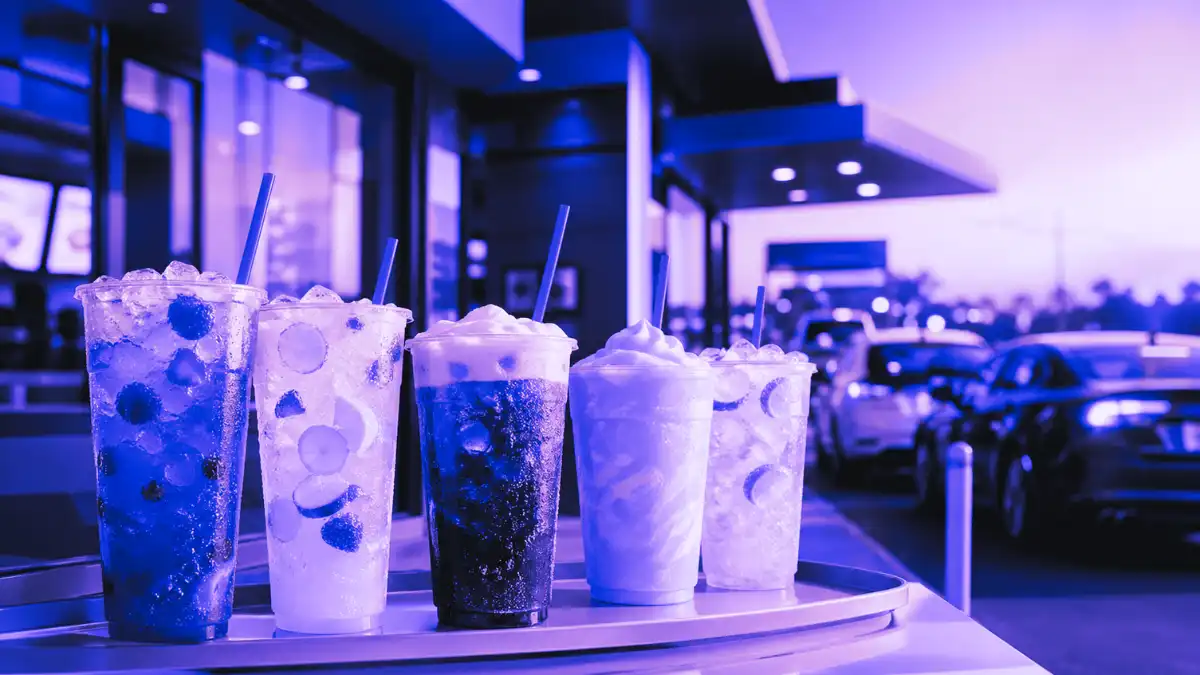
The lineup features three Refreshers on a caffeinated lemonade base and three crafted sodas, including berry, orange dream, and vanilla-enhanced Dr. Pepper varieties. The move draws from 2025 test markets and the CosMc’s pilot.
The strategic relevance lies in distribution. McDonald’s operates 13,706 U.S. restaurants and generated global systemwide sales of more than $139 billion in 2025.
Those assets give the company unmatched drive-thru density and app reach. The strategy is designed to make existing restaurants work harder across more parts of the day.
Why Is McDonald’s Launching New Drinks?
The beverage push targets off-peak windows that meals rarely touch. Customers who skip lunch or dinner still stop for a quick drink during afternoon slumps, commutes, or casual meet-ups.
App promotions and limited-time flavors encourage these incremental stops. Drive-thru convenience accelerates conversion.
The approach widens the addressable day without requiring appetite as the trigger. This matters because core meal traffic has grown harder to expand.
Price sensitivity, value-menu pressure, and grocery substitution compress the hunger-driven business. Drinks create demand when food does not.
The result is a practical reallocation of real estate, labor, and marketing spend toward occasions that deliver lower friction and higher repeatability.
Why Are Fast Food Chains Focusing on Drinks?
Meal purchases stay tied to episodic hunger. Beverage purchases are influenced by mood, convenience, energy needs, and social patterns. That distinction explains the industry shift.
A consumer buys a burger when appetite strikes. The same consumer returns for a flavored drink during a mid-afternoon break or post-work wind-down.
Fast-food chains now prioritize drinks to capture moments that meals alone cannot reach.
The pattern appears across the category. Starbucks built loyalty through ritual and personalization.
Dunkin’ anchored growth in daily caffeine convenience. Dutch Bros targeted youth energy and drive-thru culture. Sonic emphasized customization and value deals.
Each competitor carves behavioral loyalty that survives economic pressure. McDonald’s deploys its national scale to claim a larger share of the same routine economy.
The move reduces dependence on meal bundles that compete head-on with grocery channels. Drinks deliver predictable traffic without the volatility of hunger cycles.
How Do Drinks Help McDonald’s Make More Money?
Beverages offer structural advantages that appeal to any operator focused on contribution per labor-minute and per transaction.
Preparation relies on existing fountain and blender stations. Customization happens at the point of sale through syrups and toppings rather than back-of-house changes.
Seasonal flavors rotate with minimal supply-chain disruption. The approach generates novelty without permanent equipment upgrades or extended training.
Drinks attach easily as add-ons or stand alone. This flexibility lifts average checks during slower hours.
The economics favor speed and repeatability. That same logic also explains why McDonald’s is tightening control over traditional fountain drinks and refill access.
A new drink requires less waste management and fewer operational adjustments than a new sandwich.
Limited-time offerings create urgency that drives volume without proportional increases in cost.
Fast food is splitting into two businesses, where one is built around meals, and the other is built around habits. The beverage layer delivers faster growth and lower friction.
Is McDonald’s Trying to Compete With Starbucks and Dunkin’?
Here sits the central strategic contradiction. McDonald’s wants the repeat-visit economics of a beverage chain without becoming one.
The company seeks the repeatable visits drinks provide while preserving its core identity as a meal destination.
Heavy emphasis on beverages risks diluting the brand’s association with hot, standardized food. Consumers expect speed and value from the Golden Arches.
They tolerate experimentation in drinks only if the core menu experience stays untouched.
The rollout must deliver premium perception without raising expectations around price or complexity. This balancing act defines the resource allocation challenge.
Success requires the beverage business to subsidize the meal business without cannibalizing its identity.
What Are the Risks of McDonald’s New Drink Strategy?
National scale amplifies both the upside and the downside. McDonald’s can test, iterate, and distribute faster than smaller chains. Yet the same volume makes any inconsistency highly visible.
Specialty drinks demand precision on texture, flavor balance, and visual appeal. Frontline crews must deliver that precision during peak hours while protecting drive-thru times.
One uneven drink in a test market stays local. One uneven national rollout registers as brand-level failure.
Ingredient complexity exceeds traditional fountain soda but falls short of full coffee programs. Supply volatility on flavor components adds cost pressure. If customization slows service, the repeat-visit advantage disappears.
If drinks taste generic, differentiation from competitors collapses. Execution at this scale requires disciplined quality control. Any slippage turns the margin engine into a liability.
What Do McDonald’s New Drinks Say About the Future of Fast Food?
The expansion signals a deeper evolution. Fast-food chains move from episodic meal destinations toward platforms that own daily consumer routines.
McDonald’s already commands daily sightlines through its locations and app ecosystem. Drinks convert those touchpoints into repeatable revenue.
The shift addresses pressure on the core menu, where commoditization and value wars have limited upside. McDonald’s is not abandoning burgers.
It is layering a higher-output engine onto the existing model. Beverages handle routine demand while meals handle hunger spikes.
This hybrid approach sustains growth in a maturing market where traditional occasions deliver diminishing returns.
Beverages now account for a larger share of fast-food growth, and McDonald’s has doubled down on the lever that still can deliver repeat visits and margin relief.
Yet the move also confirms saturation. Every major QSR now floods the market with similar sweetened, caffeinated products differentiated mostly by branding, pricing, and speed.
The beverage pivot exposes fast food’s underlying vulnerability. Core menu items have commoditized after years of price competition and value bundles.
Traffic outside breakfast periods has become harder to grow. Operators respond by pursuing categories that still support premium pricing and provide operational leverage. McDonald’s executes the shift with unmatched efficiency.
The strategy accelerates the industry’s transformation into a daily-habit platform rather than a pure meal destination.
Short-term margins may improve. Long-term differentiation erodes when every chain sells essentially interchangeable liquids. McDonald’s new drinks do not reinvent fast food.
They reveal their growing dependence on beverage economics to offset limitations in the hunger-driven core.
The real growth problem sits in the maturing meal model. Beverages provide a temporary fix.
The shift buys time. It does not solve the structural pressure on the burger-and-fries foundation.