Inside this article
What Is Airbnb Adding Beyond Home Rentals
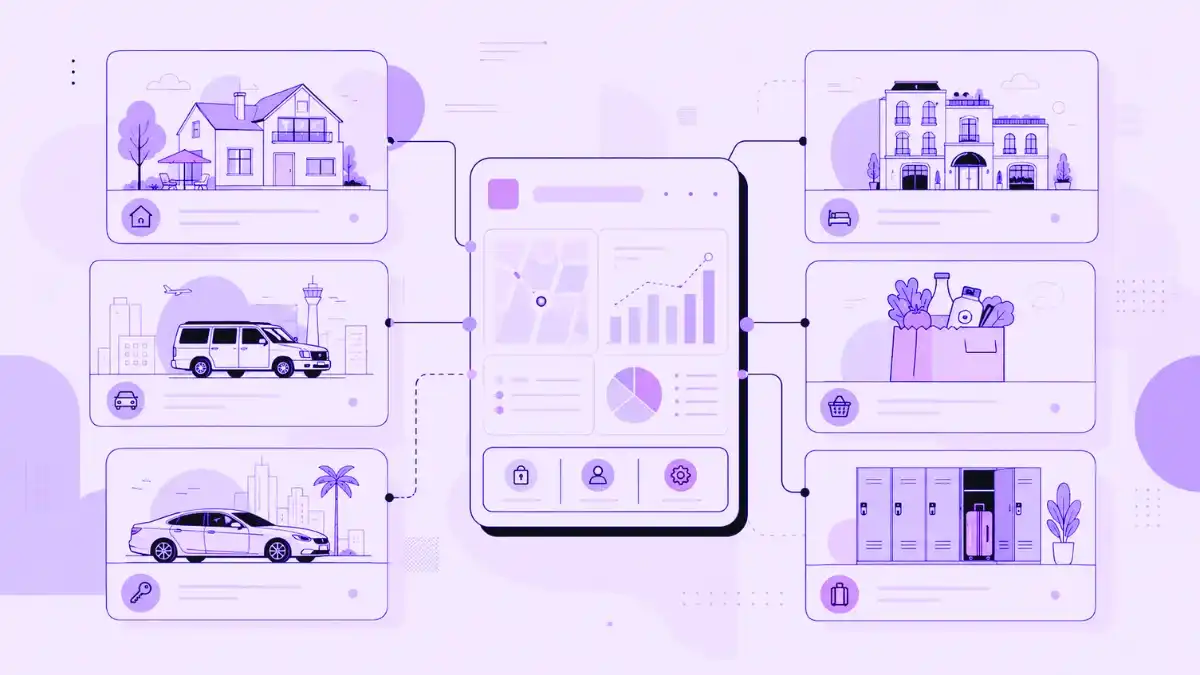
Airbnb is expanding beyond home rentals with new hotels, car rentals, airport pickups, grocery delivery, and luggage storage.
The 2026 Summer Release from Airbnb shows Brian Chesky’s plan to turn the platform from a lodging marketplace into a broader travel services platform.
That shift matters because Airbnb is no longer trying to win only the booking. It wants to own more moments before, during, and after the trip.
Airbnb is moving from stay booking to trip ownership.
The expansion is not only about adding services. It is about controlling more of the traveler’s journey inside one platform.
A guest can book a stay, arrange transportation, stock the kitchen, store bags, and eventually rent a car without leaving the app.
The strategy increases Airbnb’s revenue opportunity by creating more touchpoints for the same traveler.
But it also creates a sharper risk. Airbnb built its brand on distinctive private stays. Expanding into hotels and third-party services tests whether that trust can stretch across a more complex travel ecosystem.
Chesky’s “Amazon for services” vision captures the ambition. Amazon became the default layer for product search and fulfillment.
Airbnb is now betting it can become the default layer for travel planning and trip coordination. The upside is higher lifetime value. The danger is that broader utility makes Airbnb more useful but less distinct.
Why Is Airbnb Adding Hotels to Its Platform
Hotels expose the core contradiction.
Airbnb now needs the category it originally positioned against.
Airbnb launched as an alternative to hotels. Private homes offered authenticity where hotels delivered standardization.
The platform now integrates boutique and independent hotels directly into search results in 20 initial cities, including New York and Paris.
This shift addresses structural limits in the home-rental model. Supply in regulated urban markets remains patchy. Availability collapses during demand spikes.
Check-in processes vary wildly. Professional operations prove inconsistent.
The FIFA World Cup 2026 across the United States and Canada makes the logic urgent. Host cities face massive inbound travel.
Private inventory cannot scale reliably under regulatory pressure. Hotels fill gaps with predictable capacity and standardized service.
Early pilot data already show hotels do not simply cannibalize homes. Roughly 55% of guests who book a hotel property later book private homes under the same account.
Hotels may become an acquisition layer, not only a competing category.
The pilot signal matters because hotel inventory can introduce travelers to Airbnb first, then move them deeper into the private-home marketplace later.
The addition creates an on-ramp that feeds back into the core marketplace. Airbnb no longer defends only lodging supply. It defends the full customer relationship.
This redefinition carries internal pressure. Search filters, recommendation engines, and property presentation must handle both models without creating confusion.
Execution here determines whether hotels strengthen the ecosystem or fragment user perception into competing categories.
Looking for research-led strategic thinking?
I work with teams that need sharper judgment around markets, competitors, buyer behavior, growth opportunities, and strategic risk.
Can Airbnb Trust Extend Into Travel Services
The expansion engine runs on trust. Guests already trusted Airbnb enough to pay strangers and enter private homes.
Hosts welcomed unknowns into personal spaces. Reviews and resolution systems turned that risk into repeatable behavior.
The platform now extends this confidence to airport drivers, grocery fulfillment, and luggage handlers.
One service failure can damage the entire perception of the booking. The platform absorbs the reputational cost while collecting incremental margin.
This pattern repeats across mature marketplaces. Amazon leveraged purchase history to enter new categories. Uber converted ride reliability into food delivery. Airbnb applies stay confidence to travel services.
The difference lies in execution stakes. Services involve real-time coordination across third-party operators. A delayed pickup cannot be swapped like a canceled listing.
The platform must enforce standards that match or exceed the original host-guest model. Partnerships with Welcome Pickups, Instacart, and Bounce test this extension immediately.
Trust converts into infrastructure only while perceived reliability holds. Guests expect consistent quality signals and dispute resolution across every new category.
The asset functions as expandable capital. It lowers acquisition costs for adjacent services while raising switching costs for users. Yet infrastructure demands constant governance.
How Airbnb’s New Services Could Increase Revenue and Risk
The 2026 Summer Release integrates targeted services to capture discrete travel spend.
Airbnb is adding service coverage across multiple trip moments.
The expansion is not one feature. It is a layered services push across arrival, storage, mobility, and post-booking convenience.
Grocery delivery via Instacart is available in over 25 U.S. cities, with no delivery fees and $10 off orders over $50.
Airport and train station transfers via Welcome Pickups are available in more than 160 cities worldwide, with flight tracking and curbside service.
Luggage storage via Bounce is available at 15,000 locations across 175 cities for pre-check-in or post-checkout convenience.
Car rentals launch later this season, reflecting that nearly one-quarter of guests already rent vehicles during trips.
Each integration increases average revenue per user.
The app evolves from a booking tool into a trip coordinator. One completed service surfaces the next logical recommendation. Frequency rises. Spend that previously leaked to separate providers now stays inside the ecosystem.
Yet the additions also multiply execution surfaces.
Service expansion increases both revenue surface and failure surface.
The challenge is not adding more services to the app. The challenge is governing inconsistent execution across local partners, timing-sensitive moments, and guest expectations.
Quality control spans hosts, hotel operators, delivery drivers, and storage facilities.
Support volume grows with every added touchpoint. Dispute resolution becomes more complex when multiple providers contribute to a single trip.
| Service | Partner | Initial Reach | Strategic Payoff | Execution Risk |
| Grocery Delivery | Instacart | 25+ U.S. cities | Captures post-arrival spend, reduces separate app usage | Delivery delays create immediate check-in friction |
| Airport/Station Transfers | Welcome Pickups | 160+ cities | Owns arrival logistics, builds pre-stay engagement | Real-time variables expose partner reliability gaps |
| Luggage Storage | Bounce | 15,000 locations in 175 cities | Eliminates bag management pain, extends session time | Storage failures reflect directly on overall stay trust |
| Car Rentals | Undisclosed partners | Global rollout in 2026 | Adds mobility layer, responds to 25% guest demand | Variable local supply and surge conditions amplify complexity |
The table isolates the immediate revenue upside against the operational exposure. Breadth drives frequency. It also compresses margins when support costs accelerate faster than incremental revenue.
The Amazon Comparison Has a Weak Spot
The Amazon analogy sounds compelling on earnings calls. Amazon scaled across millions of standardized products. Fulfillment could be centralized and predictable.
Travel services operate under variable local conditions, partner performance, and real-time human variables.
A delayed grocery order creates dissatisfaction at check-in. An unreliable transfer shapes the entire first impression of the stay.
Quality enforcement spans decentralized operators, each with varying levels of platform ownership.
This creates structural tension. Support burden rises nonlinearly with trip complexity. The refund logic must reconcile lodging, transport, and provisions under a single policy.
Brand perception shifts from a focused marketplace to a broad coordinator.
The original clarity that defined Airbnb as the place for unique homes now competes with perceptions of a general travel utility.
Users begin to question whether the platform remains best-in-class in any single element when it attempts to excel in all of them.
Operational pressure peaks during high-demand events. The FIFA World Cup 2026 tests capacity across every new service simultaneously.
Hotel inventory must scale. Transfer partners face driver availability constraints. Grocery fulfillment contends with event-related supply shortages.
The platform absorbs blame for any breakdown, even when third parties are at fault. This risk profile differs sharply from the peer-to-peer model, where hosts held primary accountability.
| Dimension | Home-Rental Model | Expanded Services Model | Resulting Pressure |
| Quality Control | Host-driven reviews | Partner performance metrics | Inconsistent standards across categories |
| Support Burden | Stay-specific disputes | Multi-provider resolution | Higher volume and escalation complexity |
| Supply Reliability | Variable private inventory | Professional and partner capacity | Increased overhead during demand spikes |
| Brand Clarity | Unique home experiences | Full-trip coordination | Dilution of original positioning |
The table highlights why services prove harder to scale than products. Amazon standardized fulfillment. Airbnb must coordinate variable human delivery across cities and partners.
Can Airbnb Expand Without Losing Its Brand Identity
Airbnb’s expansion will not be judged by how many services it adds. It will be judged by whether those services feel as reliable as the original booking experience.
The 2026 moves arrive while the core business remains strong.
Q1 2026 revenue reached $2.7 billion, up 18 % year-over-year. Gross booking value hit nearly $30 billion, up 19 %. Nights and seats booked grew 9 %.
Airbnb’s expansion is happening from a position of growth.
The core platform still shows momentum, which makes the services push a strategic expansion rather than a simple replacement for a weakening business.
Full-year 2025 revenue stood at approximately $12.2 billion with continued double-digit momentum projected into 2026 (Source: Airbnb Q1 2026 Financial Results, May 7, 2026 | Airbnb Q4 2025 Shareholder Letter, February 12, 2026).
These metrics reflect the pre-expansion base. The true test begins when new services constitute a meaningful revenue share.
If complexity drives higher churn or forces elevated marketing spend to re-establish clarity, the strategy dilutes the very asset that enabled growth.
What Airbnb’s Services Expansion Means for Platform Strategy
Trust converts into infrastructure only while the platform maintains operational discipline.
Airbnb now manages a hybrid model that blends peer-to-peer flexibility with professional service reliability. The combination creates execution tension that pure product marketplaces avoid.
Senior marketers tracking platform players should watch three variables closely. First, partner governance quality.
Second, cross-category retention rates beyond the hotel pilot. Third, any rise in support costs or dispute volume as services scale.
The success of Airbnb’s expansion depends on three operating signals.
Breadth without discipline becomes dilution. Trust without enforcement becomes liability.
Platform breadth creates advantage only when governance keeps pace.
The upside rises as Airbnb adds more services, but the operating burden can rise faster if quality control, support systems, and partner standards lag behind.
Airbnb is testing whether marketplace trust built on distinctive homestays can survive its expansion into a full travel-services layer.
The outcome will reveal whether the strategy turns the platform into durable infrastructure or exposes its fragility under real operational load.
The Amazon comparison works for products. Services break in local, human, and variable ways. Chesky’s bet rests on execution that the market has yet to see at this scale.