Inside this article
Why Is Lammes Candies Closing Even Though Candy Sales Are Growing?
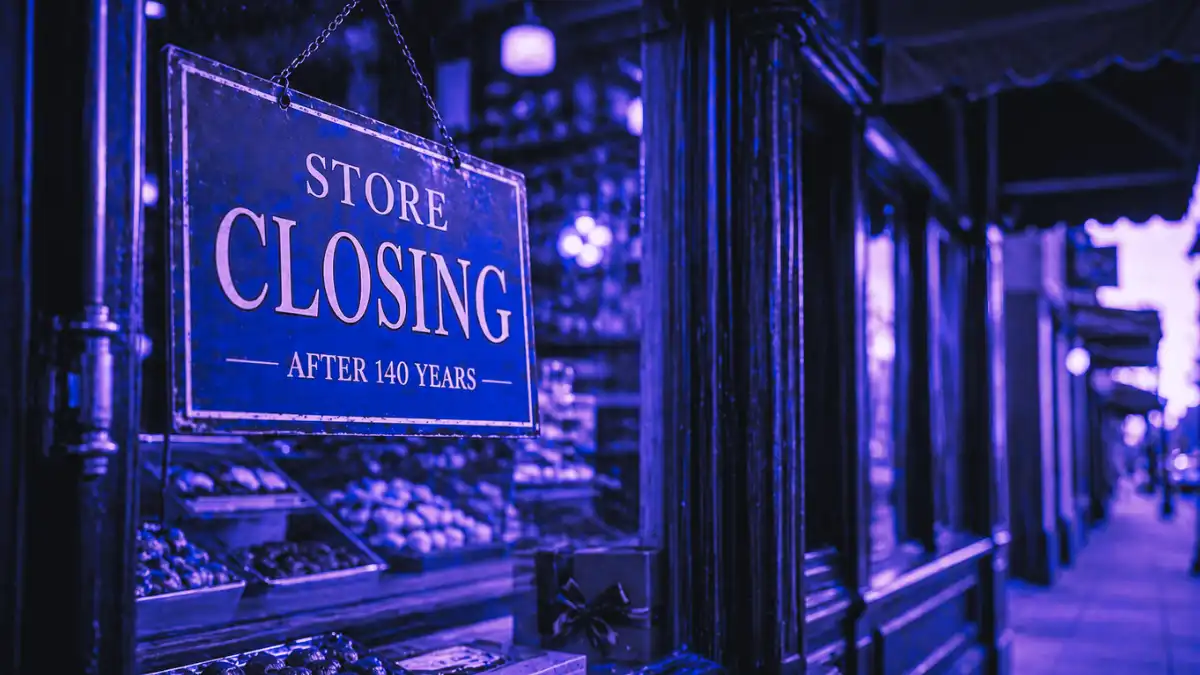
Lammes Candies, a historic Texas confectionery brand, is shutting down its stores in 2026 after more than 140 years in business.
This closure reflects a broader shift in the candy retail industry where legacy confectioners are losing relevance despite strong overall demand.
Lammes closed its Round Rock location in April 2026 and is winding down its flagship store, while Kate Weiser Chocolate in Dallas followed weeks earlier.
At the same time, US confectionery sales reached $55 billion in 2025 and continue to grow. The issue is not declining demand for candy. It is where and how that demand is captured.
Legacy candy brands built around physical storefronts now operate outside the moments when purchases actually happen, exposing how shifting distribution and rigid retail models are forcing long-standing businesses to exit.
Why Are Candy Stores Losing Customers to Grocery Stores and Online Shopping?
Consumers purchase the same volume of sweets they always did. Grocery chains and e-commerce platforms now control discovery and impulse execution.
Walmart and Kroger dictate endcap positioning and checkout algorithms that drive 30 to 40% of category volume.
Amazon and Instacart own the search and recommendation loops that surface products before consumers finish typing.
Legacy confectioners once owned direct demand through their own doors. They now function as suppliers inside someone else’s ecosystem.
This power redistribution moves the margin upstream to the owners of traffic and placement. Standalone stores absorb full overhead while aggregators spread costs across millions of daily transactions.
The result is compressed supplier margins and starved destination retail of consistent traffic.
Brands that once controlled their value chain from kitchen to counter now pay slotting fees and compete for visibility inside third-party gatekeepers who extract rent at every touchpoint.
How Do Grocery Stores and Online Platforms Control Candy Sales Today?
Supermarkets and hypermarkets still command roughly 45 % share. Their leverage derives from impulse zones that convert routine shopping into unplanned candy sales.
Convenience stores capture daily micro-purchases during fuel or coffee stops.
Online platforms accelerate through subscription models and one-click reorders. Specialty standalone retail contracts to around 10 % projected share by the end of 2026.
The contraction occurs because demand now registers inside broader routines rather than isolated trips.
Platforms and chains extract data on every basket and optimize placement in real time. Historic operators lack that feedback loop and cannot adjust mix or pricing fast enough.
Margin that once stayed inside the brand now flows to the entities that control the exact moment of decision.
| Distribution Channel | 2023 Share | 2025 Share | Projected 2026 Share | 2023-2026 CAGR |
| Supermarkets/Hypermarkets | 42% | 45% | 45% | Stable |
| Convenience Stores | 18% | 19% | 20% | 3.8% |
| Online/E-commerce | 11% | 15% | 17% | 8.6% |
| Specialty/Standalone | 15% | 12% | 10% | -9% |
| Other (Vending, Drug) | 14% | 13% | 13% | Flat |
(Source: National Confectioners Association 2026 State of Treating | Mordor Intelligence North America Sugar Confectionery Report)
Standalone share erosion continues even as total category revenue heads toward $62 billion by 2030.
Aggregators capture the growth because they own the low-friction entry points that legacy footprints cannot replicate.
Why Nostalgia Is Not Enough to Keep Candy Stores in Business
Emotional attachment to heritage brands still surfaces during holidays and family milestones. Nostalgia creates memory, not frequency. It spikes revenue during predictable events.
It does not cover the daily volume required to cover fixed costs. Consumers remember Lammes pralines with fondness, yet satisfy their craving through whichever channel is in front of them during a grocery run or late-night scroll.
The same pattern appears in independent theaters that closed Southern California sites in early 2026 and casual dining chains that shuttered dozens of locations nationwide.
Heritage equity sustains loyalty among a shrinking core. It supplies no defense against the frequency demands of modern consumption.
Legacy brands that counted on generational memory now face transaction gaps that fixed costs quickly widen into cash-flow crises.
Why Candy Stores Only Get Sales During Holidays and Not Daily
Cross-category data shows the identical failure mode. Theaters lost ground to on-demand streaming that eliminated planning entirely. Diners compete against delivery that collapses the outing into a tap.
In each case, nostalgia holds emotional value while transaction frequency migrates elsewhere. Confectionery follows suit.
Shoppers still seek familiar flavors yet source them inside broader errands or digital carts.
The retention layer creates occasional lift. It cannot offset the steady erosion of incidental purchases that once filled registers between peak seasons.
| Heritage Retail Sector | 2025-2026 Closures Example | Primary Pressure | Revenue Impact |
| Specialty Confectionery | Lammes Candies (TX), Kate Weiser Chocolate (Dallas) | Demand relocation | Foot traffic drop 25% est. |
| Independent Theaters | LOOK Dine-In Cinemas (multiple CA sites) | Home streaming shift | Planned visit volatility |
| Casual Dining | Denny’s and Red Robin (combined 200+ sites) | App and delivery convenience | Fixed-location margin erosion |
(Source: Company announcements and retail closure reports, April 2026)
The table highlights how emotional equity persists while volume economics deteriorate across destination formats.
Why Candy Stores Are Becoming Too Expensive to Run
Physical locations lock operators into overhead that scales poorly against fragmented demand. Austin retail rents reached $28 to $33 per square foot in 2025 with continued upward pressure.
Labor costs for skilled candy production and front-of-house staff rose in tandem with minimum-wage adjustments and competition for talent.
Cocoa prices spiked above $12,000 per ton in late 2024 before a partial crash in 2026, yet the volatility still forced repeated price adjustments and margin compression through 2025.
Legacy confectioners maintain manufacturing tied directly to retail showrooms. That integration once delivered efficiency.
It now creates excess capacity and a risk of spoilage during traffic lulls. Modern competitors centralize production and fulfillment, then push products through high-velocity channels that absorb volume without the same fixed burden.
Monthly overhead for a typical standalone store ranges from $180,000 to $250,000, while revenue per square foot declines.
The divide widens quarterly until closure becomes the only arithmetic solution.
What Costs Are Causing Candy Stores to Shut Down?
Ingredient volatility hits hardest because candy relies on commodities that fluctuate faster than its pricing power can keep up with.
Rent inflation in high-traffic markets like Austin adds another layer that destination retail cannot pass through without losing the very foot traffic it depends on. Labor remains constant regardless of daily sales.
These pressures do not reflect product irrelevance. They expose a demand capture model built for concentrated traffic that no longer exists.
Brands that once controlled every cost variable now inherit the full weight of infrastructure while competitors distribute it across platforms and chains.
| Cost Category | Legacy Standalone (Monthly) | Modern Channel Equivalent (Per Volume) | Margin Impact |
| Rent and Utilities | $6,500-$9,500 | $1,500-$3,000 (shared facilities) | Full fixed burden |
| Labor | $14,000-$20,000 | $5,000-$8,000 (automated fulfillment) | Scalability collapse |
| Ingredients and Supply | High volatility + waste | Centralized hedging and lower spoilage | Price pass-through limits |
| Visibility and Placement | In-store experience only | Algorithm and shelf fees | Higher customer acquisition in new systems |
(Figures based on 2025-2026 retail benchmarks and industry models; Austin commercial real estate reports and NCA data)
The comparison reveals how legacy infrastructure converts assets into liabilities when demand disperses. Costs stay locked while revenue fragments.
How People Buy Candy Today Instead of Visiting Candy Stores
Historic candy shops engineered spaces for planned indulgence and sensory theater. Modern buyers operate in continuous availability.
Candy now appears as an interruption during grocery checkout, a fuel-stop add-on, or an algorithmic suggestion at 11 p.m.
The market shifted from brand-driven demand to placement-driven conversion. Travel time to a specialty store averages 15 to 25 minutes, plus parking time.
Digital or convenience capture happens in under 11 seconds inside an existing routine.
Impulse zones inside supermarkets generate the majority of unplanned volume. Brands win or lose based on whether they occupy that exact moment, rather than on whether consumers remember their names.
The model change turns candy from an occasional reward into ambient fuel.
Placement inside high-frequency environments now dictates market share more than heritage storytelling ever did. Legacy brands have been demoted to suppliers. They no longer own the demand.
They compete for shelf seconds inside someone else’s traffic stream.
Which Other Retail Stores Could Close Next Like Candy Shops?
These closures operate as precise early warnings for a broader structural transition. Distribution ownership determines survival.
Convenience and placement dominate because they align with zero-friction decision paths.
Overhead levels become lethal when traffic no longer concentrates. Nostalgia supplies spikes that collapse under frequency requirements.
Physical presence loses leverage once demand migrates into moments rather than locations.
The pattern already accelerates collapse in independent bookstores locked into high-rent destination footprints, local diners dependent on planned outings, and specialty apparel operators that still treat stores as primary demand engines.
What replaces them are integrated ecosystems such as grocery chains and algorithm-driven platforms that absorb the same level of consumption without the fixed-cost drag.
Long-term winners own the placement layer. They control data loops, shelf algorithms, and impulse architecture. Suppliers that once built brands now supply raw material to those systems or exit entirely.
What Businesses Can Learn From Lammes Candies Closing
Legacy confectioners like Lammes and Kate Weiser did not fail because they were old. They failed because their demand-capture model became obsolete while the infrastructure remained frozen.
Platforms and chains now own the moments that generate volume.
Nostalgia creates memory, not frequency. Operational rigidity turns yesterday’s assets into tomorrow’s liabilities. Demand never left candy. It simply moved faster than the stores built to catch it.
The arithmetic of obsolescence is complete. Placement overrides brand. Suppliers replace owners. The rest follows.